

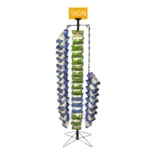


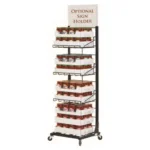
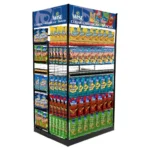

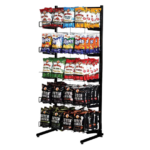
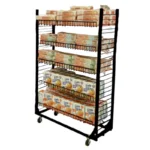











For retail distributors and private label owners, the ability to evaluate the effectiveness of display strategies is of prime importance for success.
Two key metrics often discussed in this context are Return-on-Investment (ROI) and Return-on-Equity (ROE). Understanding the nuances of ROI vs ROE can empower entrepreneurs to make informed decisions that maximize their display impact, ultimately driving sales and enhancing brand visibility.
Read on as we unpack these concepts, and grab the key takeaways you can apply to your business.
What is Return-on-Investment (ROI)?
Return on Investment (ROI) is a metric for evaluating how profitably a company uses its resources. By assessing ROI, you can determine the financial returns generated from specific investments, which will guide you in resource allocation.
The formula for ROI is straightforward:

Source: https://projectmanagementacademy.net/resources/blog/return-on-investment/
Basically, a higher ROI indicates that an investment is yielding substantial returns. In general, any positive ROI is considered good, and expecting 5% to 7% is reasonable. Higher than 10% can be interpreted as strong.
ROI is a valuable tool for assessing the effectiveness of marketing campaigns, product placements, and other display-related expenditures in the retail sector.
What is Return-on-Equity (ROE)?
Return-on-Equity (ROE) shifts the focus from specific investments to the overall profitability of a company in relation to its equity. Dividing net income by shareholder equity reveals the percentage efficiency of a company’s profit generation from its equity base.
The formula for ROE is:

Source: https://www.wallstreetprep.com/knowledge/return-on-equity-roe/
A high ROE suggests robust management practices and a strong ability to turn shareholder investments into profits. A good ROE is between 15% and 20%.
In the context of retail, ROE serves as a gauge of a company’s financial health, indicating how well it leverages its resources to achieve sustained profitability. It also offers insights into long-term growth and stability, making it particularly valuable for strategic decisions.
ROI and ROE: Key Differences
While both ROI and ROE are essential metrics for assessing financial performance, they serve different purposes.
ROI focuses on evaluating the profitability of specific investments or short-term projects such as retail displays. It measures how efficiently a particular program or scheme converts into returns and provides immediate insights to drive tactical decisions.
Conversely, ROE evaluates a company’s overall ability to generate profit from shareholder equity, offering a broader view of financial health. This metric is essential for long-term planning and sustainability as well as in assessing if an organization efficiently leverages its equity to grow over time.
Another distinction lies in their applicability. ROI is often used for project-specific evaluations, while ROE provides a holistic appraisal of company-wide performance.
These differences make ROI more suitable for evaluating individual retail display efforts, whereas ROE is ideal for understanding the broader financial impact of these strategies.
ROI in Retail Display
For distributors and private label businesses, focusing on ROI in retail display efforts unlocks valuable insights into what works best. These structures require a mix of expenditure in design, materials, and strategic placement. Tracking ROI allows you to pinpoint which display strategies actually drive sales and, in turn, enable more informed decision-making.
Imagine setting up an engaging end-cap display in a prominent retail store. By examining sales figures before and after the display’s introduction, you can determine the sales boost directly linked to the display, allowing you to calculate the precise ROI. If the result is robust, it confirms the display’s success and guides your future investments in similar setups.
Additionally, ROI metrics can help optimize expenditure on various display methods, ensuring your resources are channeled into the most profitable approaches and empowering you to fine-tune your strategies. The main objectives are always to maximize impact, drive sales, and enhance brand visibility.
ROE in Retail Display
ROE shifts the focus from immediate returns to the overarching financial health of distributors and private label businesses. When evaluating retail display efforts through the lens of ROE, the emphasis is on how these investments contribute to long-term profitability and brand equity.
Consider a brand that invests in a series of innovative in-store displays. While the immediate sales boost is essential, the lasting impact on brand recognition and customer loyalty is equally significant. High-quality, well-placed displays can enhance brand perception, which can lead to increased market share over time. This cumulative effect ultimately bolsters shareholder equity, which is reflected in a strong ROE.
Moreover, analyzing ROE helps businesses align their retail display strategies with broader financial objectives. Instead of viewing displays as isolated investments, companies can understand how these efforts integrate into their overall profitability framework. This alignment ensures that display investments not only drive sales but also contribute to the company’s sustainable growth.
By focusing on ROE, distributors can also identify which display strategies are most effective at leveraging their equity to generate profit. This insight is crucial for making strategic decisions that enhance overall business value, ensuring that every display not only captures customer attention but also strengthens the company’s financial foundation.
ROI Vs. ROE in Retail Displays: Which is Better for Evaluating Performance?
When determining the best metric for evaluating your retail display efforts, the choice between ROI and ROE hinges on your analysis goals.
For immediate, tactical insights, ROI is indispensable. It enables retailers to measure the direct impact of specific displays on sales, facilitating agile decision-making and rapid strategy adjustments. This is particularly useful for gauging the success of short-term campaigns or promotional events.
On the other hand, ROE offers a broader perspective, aligning display investments with the company’s long-term financial health. By evaluating how effectively these investments enhance overall profitability and shareholder equity, it provides strategic insights into sustainable growth.
Moreover, ROE underscores the importance of integrating display strategies into your wider financial framework. This ensures that every dollar spent not only boosts immediate sales but also strengthens the company’s equity position over time.
Ultimately, both metrics serve essential roles. ROI excels in optimizing immediate display performance, while ROE guarantees these efforts are contributing to long-term financial stability. Retail distributors and private label brands should consider both metrics to achieve a balanced approach, leveraging the strengths of each to maximize both short-term impact and long-term growth.